Both Sides Now
This past week (week 1) our pushes and pulls have been bilateral movements:
both sides of the body are working together – and doing the same thing.
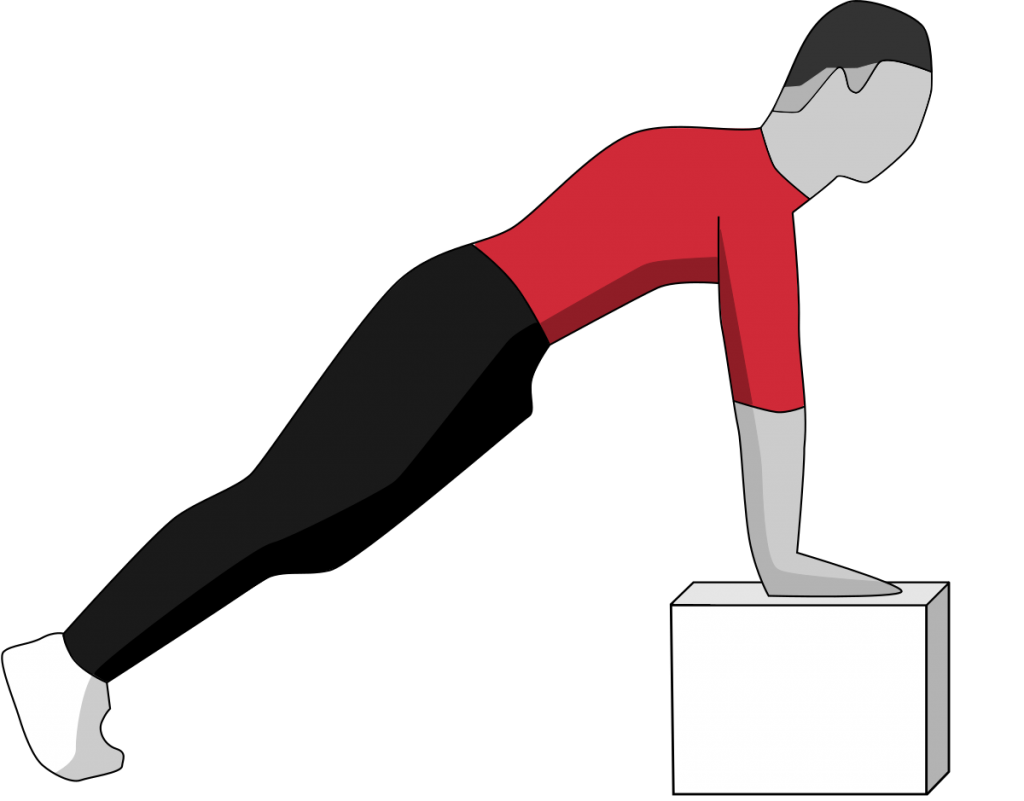
You may have noticed that the work – where the effort feels like it’s happening – in these push up and pull up variants is felt mainly in the upper body.
Sometimes Push ups and Pull ups are called “upper body” rather than “whole body” because the work is felt mainly in the upper body – even though you have to actively engage the muscles in the lower body to move in these positions.
Whole Body Bilaterals
Two handed kettlebell swings – fantastic whole body movement that combines the dynamics of a push at the hips and a pull at the upper body
Another fantastic push/pull movement that can be done with or without weights: the turkish get up. AWESOME – if you can do nothing else – a 7 minute block of turkish getups is a fantastic movement.
Upper body Bilaterals
Examples of upper body bilateral pulls include ROWS with rings or a bar (or in the gym using cable machines for this). “Cleans” with a bar bell, dumbbell or kettlebell, are pulls. Pulling a rope hand over hand, great. Pull ups, as noted, are usually considered upper body dominant pulls. Biceps curls are traditional pulls for the arms.
For pushes, push ups – all varieties – on the ground or with rings are super. DIPS, also are great pushes for the upper body. Sled pushing if in a x-fit space. Ring flies. All good
Bonus: Battling Ropes are a cool upper body push and pull – also works a lot of the “anterior chain” – that is the muscles particularly thought of as pulling – the front part of the body. These are dynamic movements which are fantastic for heart strength too.
Bilateral Lower Body Focus
Lower body pushes and pulls may include things like
– pushing a door closed with your foot
– pulling a box toward you with your heel.
In the gym some machines that work the legs in particular and focus on say the knee joint are known as “leg extensions”- sitting in a chair type thing and raising your leg at the knee. The complement is a “hamstring curl” where you may lie on your stomach or stand and pull a weight towards your butt via your heel.
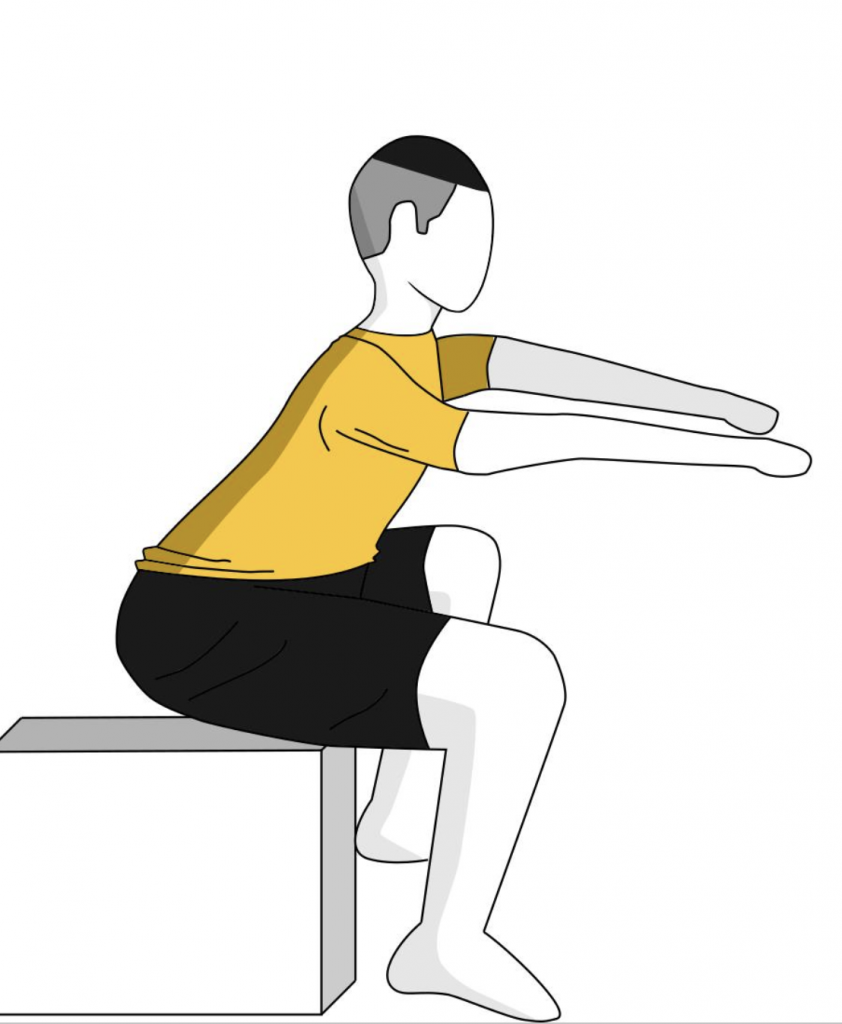
What we’re going to focus on are two foundational categories of lower body oriented push/pullmovements. These are known as:
- squats
- hinges
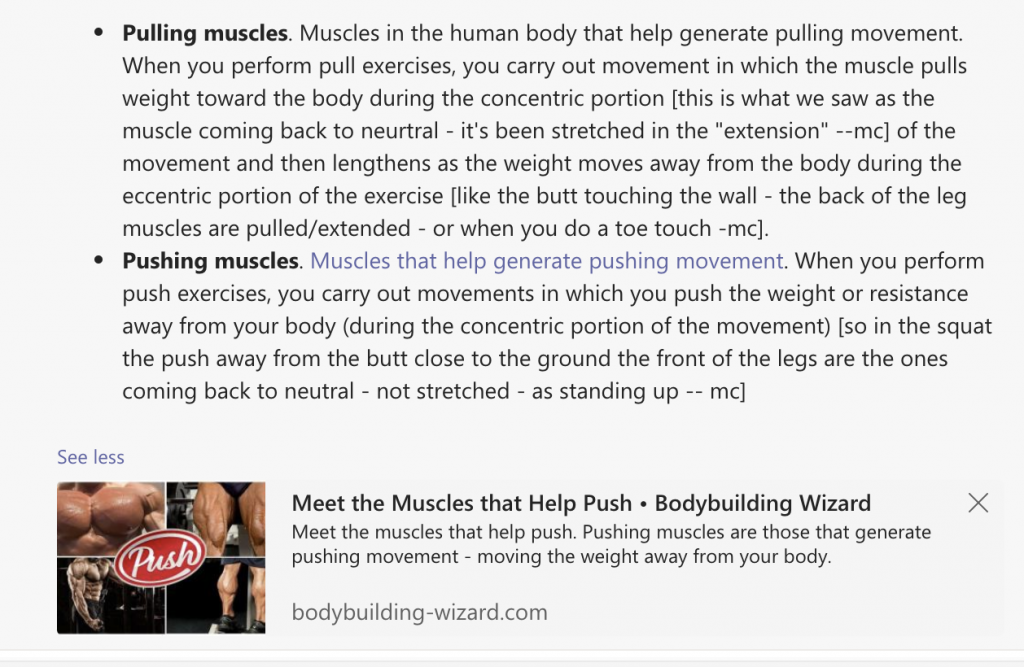
The squat focuses on the front of the upper legs
The hinge on the back of the upper legs
BOTH have in common working the hips – both involve the hips – a lot.
Practice question: which lower bilateral move of squat or hinge
do you think is the push and which the pull?
Both squats and hinges act on the same joints: the knees and the hips. You can think of the movement at the knee and the hip as a complement to the work at the shoulder and elbow – but in the other direction.
Heres a question on how to put your lower body bilateral superset together:
if you start w a pushup in your upper body (first) block, what will you choose to start with in your lower body bilateral block?
if your reply is it depends, on what?
Some Lower Bilateral Choices
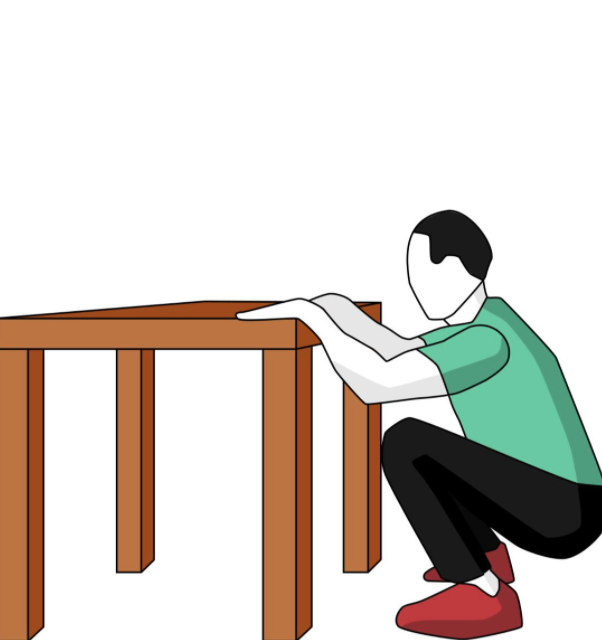
Squats:
Supported Squat
Box squat
Glute raise
Shoulder stand squat
Full squat
Intriguingly the squat is often easier for gals than guys, but i’ve yet to work with a guy who with a little practice couldn’t get the backs of his legs to touch. How? hang onto something. That’s right – use a table, a pole, a door handle to support you all the way down and back up – and just practice using less and less assistance.
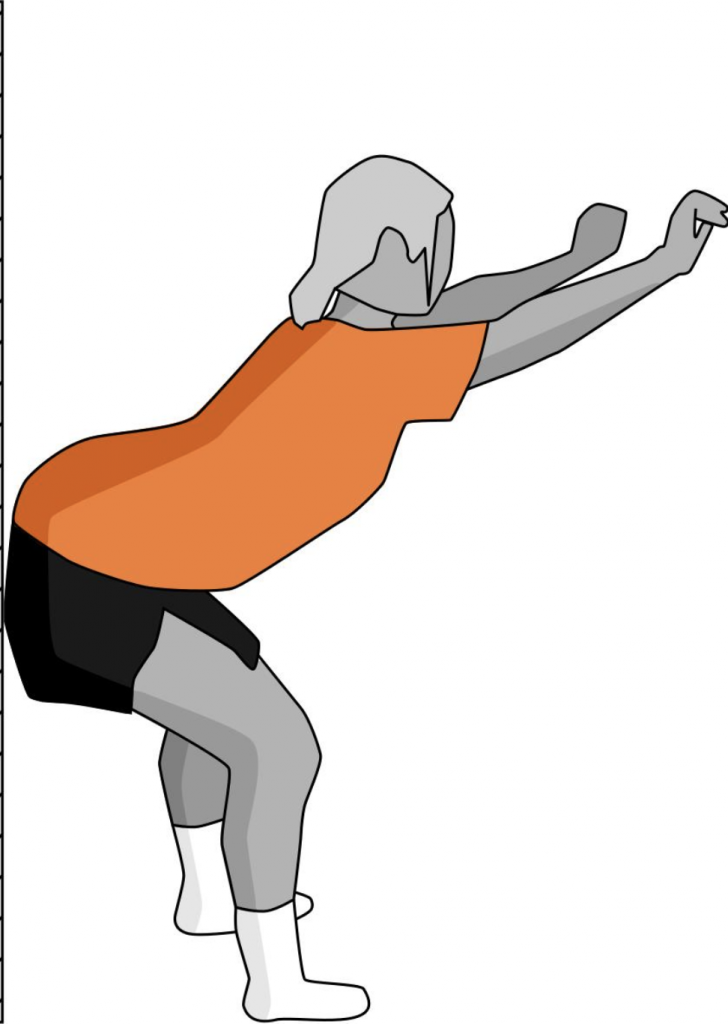
Hinges
Wall rdl
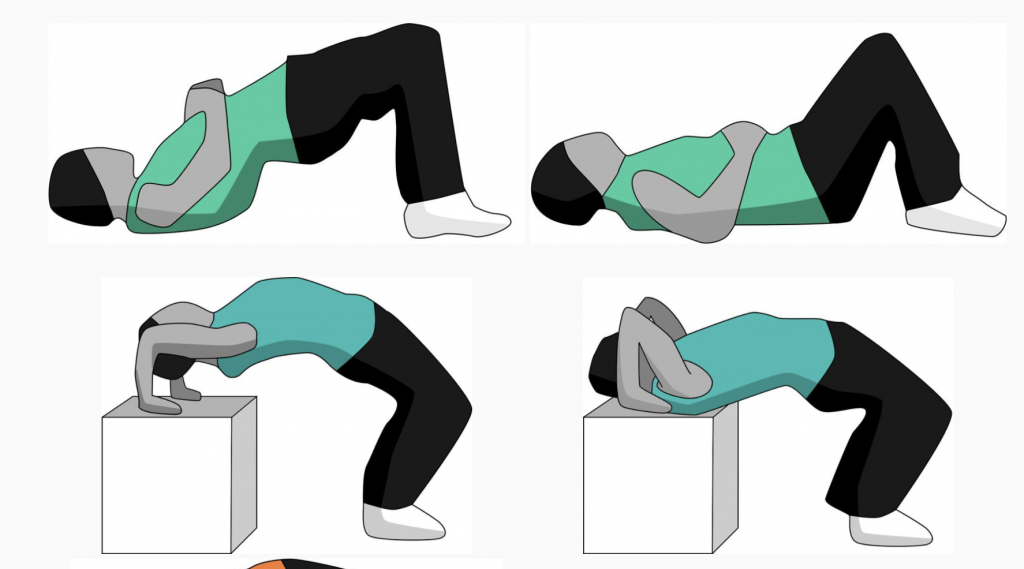
Short bridge
Angled bridge
Full bridge
The idea of something like the Wall RDL (shown here) is that when you know what muscles are suppoed to feel the work – like when you know where you’d feel work in a hinge movement (front or back of legs??) then you can adjust your position to be SURE you FEEL the work in that area.
Sometimes that might mean hanging onto something to let you get that focus; sometimes it’s just adjusting your position. like moving your feet further away from the wall. Or pushing your butt back more rather than leaning back – get that stretch learned about in NEGATIVES – and control the POSITIVE.
here’s a video that does the move holding a weight – with some no-no’s thrown in
If you’re using our Blocks approach: ordering
You are doing an upper body bilateral push and pull in Block one and a lower body bilateral push and pull in Block 2.
How do you decide with what move to start Block 2?
And to find the variant of the moves you’ll choose for Block 2 – same protocol as for Block 1: Find you EFFORTFUL level 10; use five reps at that load.